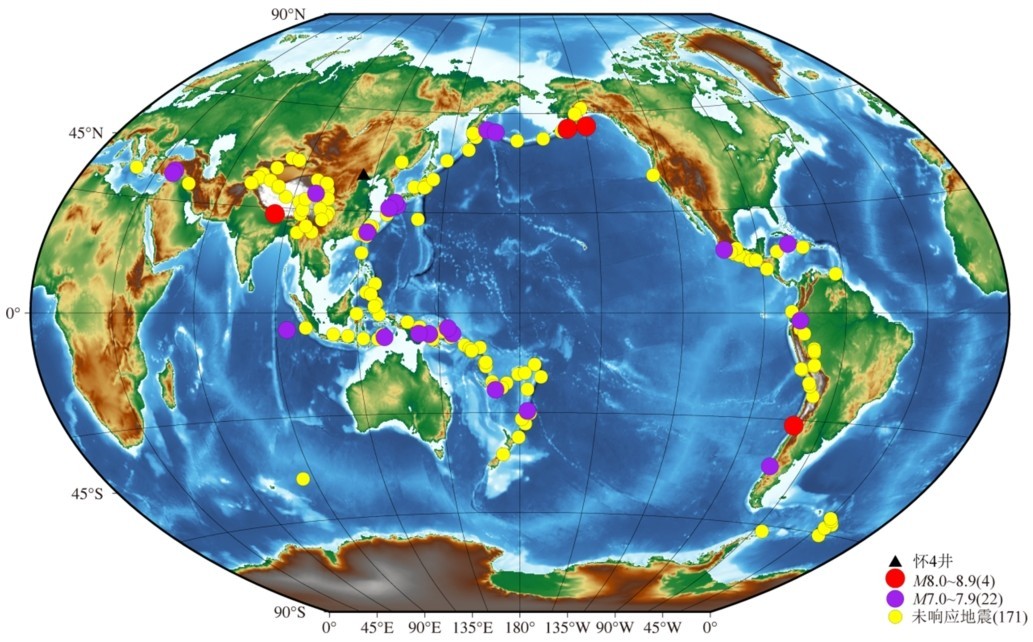
本文使用原始数据进行初步的异常提取,其结果如表1所示:发震次数共197次,怀4井响应次数为26次,占发震次数的13.2%。根据表1和表2可以看出,怀4井对中国地区MS7.0~7.9的地震响应比例为50%,而MS6.0~6.9的地震无同震响;对全球MS≥8.0的地震响应比例为44.4%, MS7.0~7.9的地震响应比例为16.2%。这说明怀4井对中国地区MS7.0~7.9和全球MS≥8.0地震响应较好。
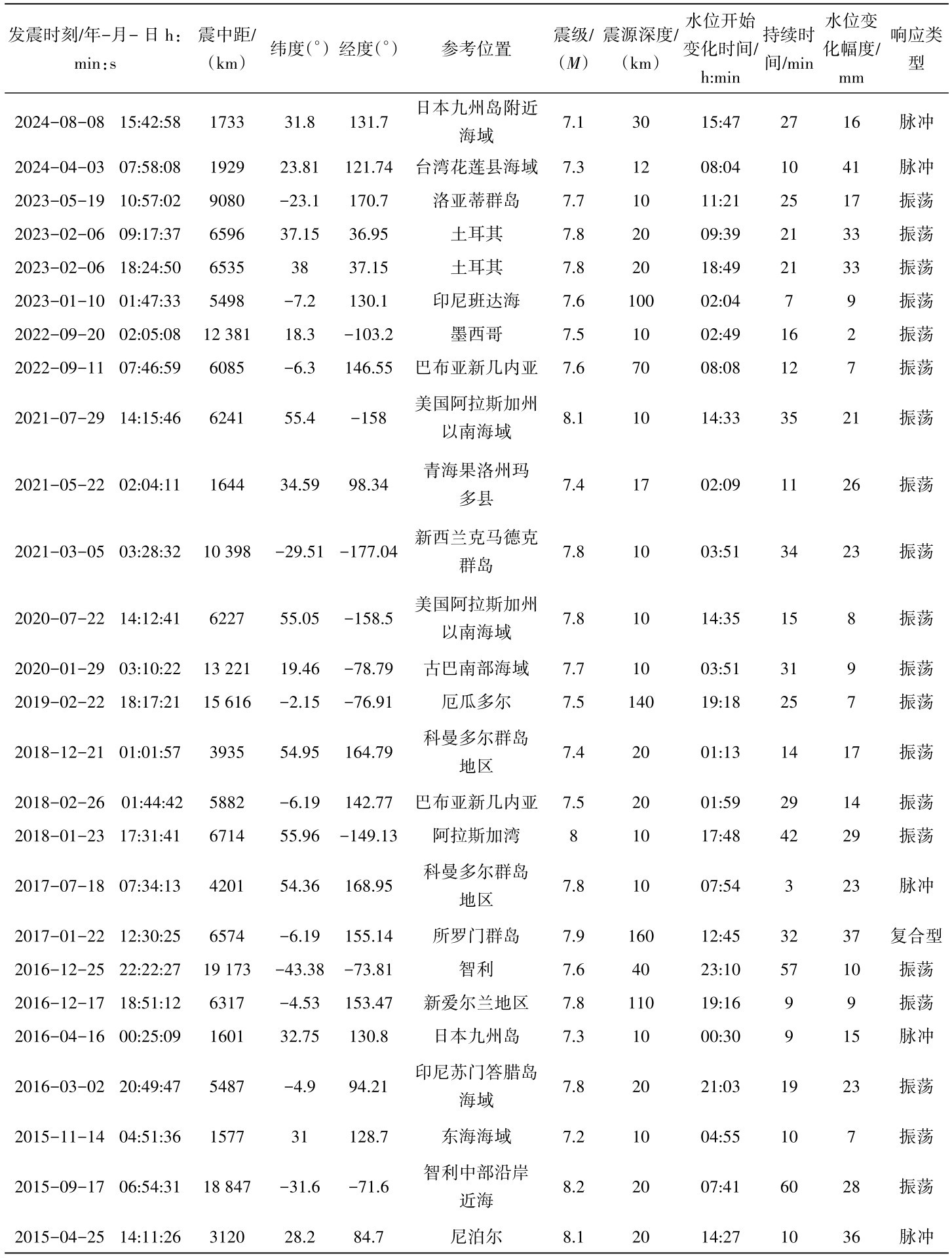
怀4井记录到的26次地震事件,震源深度10~160 km,震中距范围1577 km(东海海域)至19 173 km(智利),水位变化幅度2~41 mm,响应类型包括振荡、脉冲、复合型(表2)。
2.1 响应时间与震级、震中距的关系
本文的响应时间为水位变化持续时间,从表2可以看出,怀4井同震水位变化持续时间介于3~60 min,同震水位变化持续时间最短的是2017年7月18日科曼多尔群岛地区MS7.8地震,水位变化持续时间为3分钟;同震水位变化持续时间最长的是2015年9月17日智利中部沿岸近海MS8.2地震,水位变化持续时间为60 min。
图1 怀4井地震地质构造背景图(修改自文献[11]) Fig.1 The tectoni background of Huai-4 well(revised from reference [11])
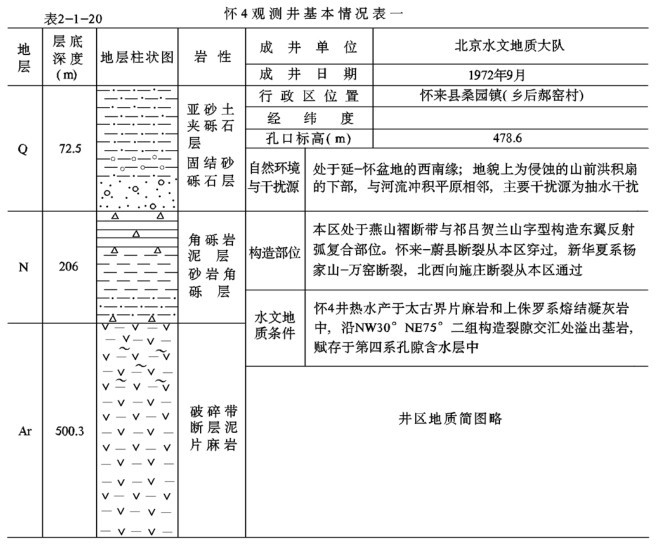
图2 怀4井井孔柱状图Fig.2 Well bore columnar diagram of Huai-4 well
表1 观测井井水位地震次数及响应次数统计表Table 1 Statistics of the number of earthquakes and the number of responses of the observation well water level
表2 怀4井井水位同震响应特征Table 2 The characteristics of the seismic response of the well water level of Huai 4 well
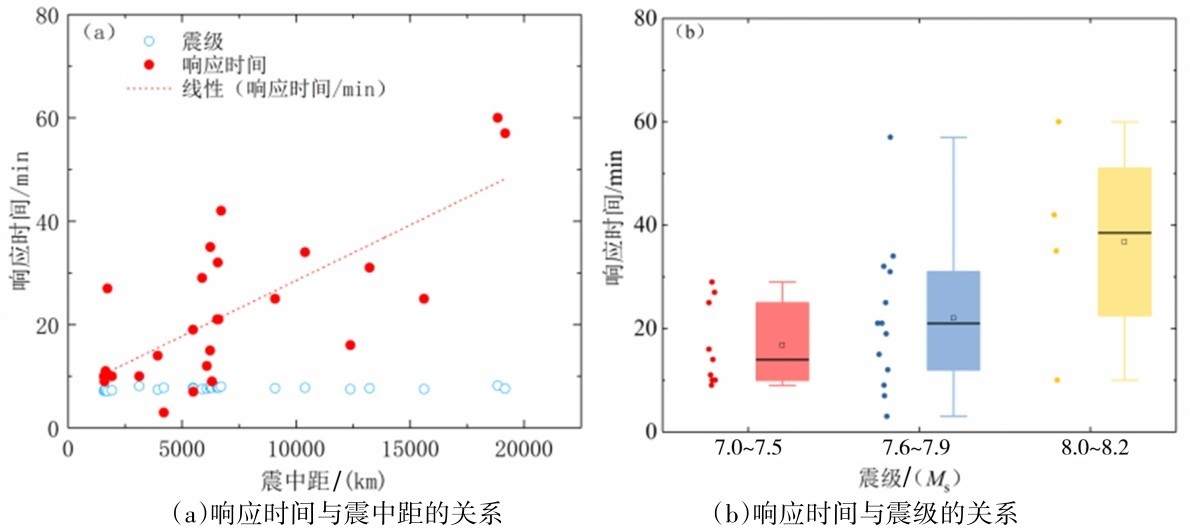
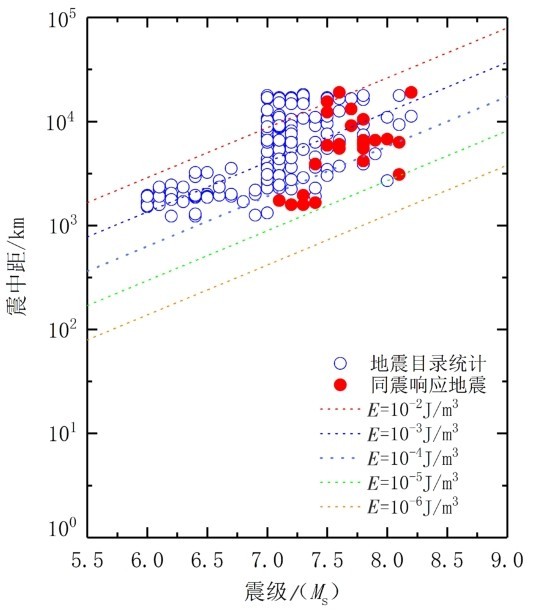
通过统计分析和可视化方法,探讨震级、震中距、响应时间的关系,发现震中距与响应时间呈正相关性(图3a),皮尔逊相关系数r=0.52,如2019年2月22日厄瓜多尔MS7.5,震中距15 616 km,其能量衰减较慢,导致响应时间较长为25 min,2016年4月16日日本九州岛MS7.3,震中距1601 km,其能量衰减快,响应时间较短为9 min;震级与响应时间关系不大(图3b),皮尔逊相关系数r=0.31,理论上震级越大,地震能量释放越强,导致含水层应力调整时间延长,而怀4井的震级与响应时间相关系数较低,说明其同震响应时间与震级关系不大,受震中距和震源深度干扰比较显著。例如,2024年4月3日台湾花莲MS7.3(震中距1929 km)水位持续变化时间为10 min,2018年1月23日阿拉斯加湾MS8.0(震中距6714 km)水位持续变化时间为42分钟,显示震中距的调制作用。而2017年1月22日所罗门群岛MS7.9(震源深度160 km)持续32 min,远高于同震级浅源地震,可能与深部能量释放有关。
图3 响应时间与震中距、震级的关系Fig.3 The relationship between response time and magnitude,epicentral distance
2.2 水位变幅与震级和震中距的响应关系
怀4井响应幅度范围为2~41 mm,数值跨度明显,其中2022年9月20日墨西哥MS7.5地震的响应幅度最小,地震引起的水位异常幅度为2 mm;2024年4月3日台湾莲花县海域MS7.3地震的响应幅度最大,引起水位异常幅度达41 mm。
Roeloffs研究了美国加利福利亚州Parkfield BV井[11]、王利亚等[13]研究云南石林井、杨竹转等[14]研究了云南思茅大寨井的水位变化幅度与震级和震中距的关系,结果都显示,地震后井水位变化与震级和震中距满足关系为:
lgΔh=b1M+b2lgD+α(1)
式(1)中, Δh 为水位变化幅度; M 为震级; b1、b2、α为常;D为震中距。
对怀4井水位的同震响应变化做类似分析,将表2中统计到的水位变化幅度与对应的震级、震中距代入上式中进行二元回归分析,得到关系式为:
lgΔh=0.5836M-0.4215lgD-1.7578(2)
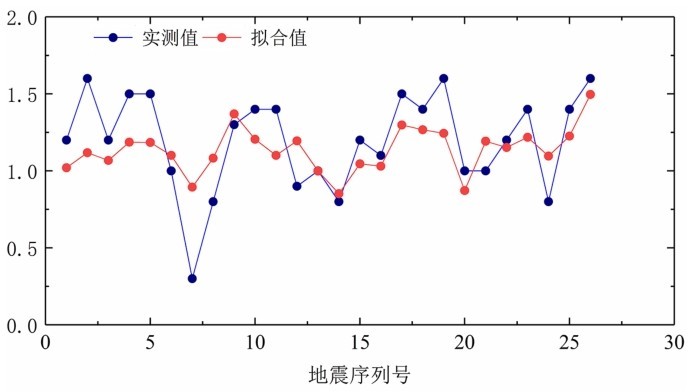
式(2)表明水位同震变化幅度与震级成正相关关系,与震中距成负相关关系,即水位变化幅度随震级的增大而增大,随震中距的增大而减小。怀4井水位变化幅度拟合值与实测值的对比图4,如图所示,怀4井除2号、7号、4号、5号存在实测值与拟合值明显的偏离情况,其余的同震响应实测值与拟合值拟合度较好。其中7号2022年9月20墨西哥MS7.5级地震实测值和拟合值偏离较明显,可能与超远场地震震动周期较长、地震波传播路径复杂有关。2号、4号、5号都属于中远场地震,这可能受震源构造方向影响,使得井孔受到地震波的作用方向和方式不同所致。
2号2024年4月3日台湾地震与22号2016年4月16日日本九州岛震级相同,震中距、震源深度相近,怀4井动水位对这两次地震的响应幅度分别为41 mm和15 mm,响应幅度相差26 mm,这可能与当时含水层渗透性、孔隙压力或局部构造应力集中有关。20号2016年12月25日智利MS7.6地震震中距19 173 km,震源深度40 km,是震中距最大的地震,怀4井动水位对这次地震响应幅度为10 mm;19号2017年1月22日所罗门群岛MS7.9地震震中距6574 km,震源深度160 km,是震源深度最大的地震,怀4井动水位对这次地震响应幅度为37 mm,其响应幅度远高于同类事件,这可能和深震源多阶段破裂或者破裂通导有关。
图4 怀4井水位变化幅度实测值和拟合值对比Fig.4 Comparison of measured and fitted values of the fluctuation amplitude of Huai-4 well
2.3 响应形态
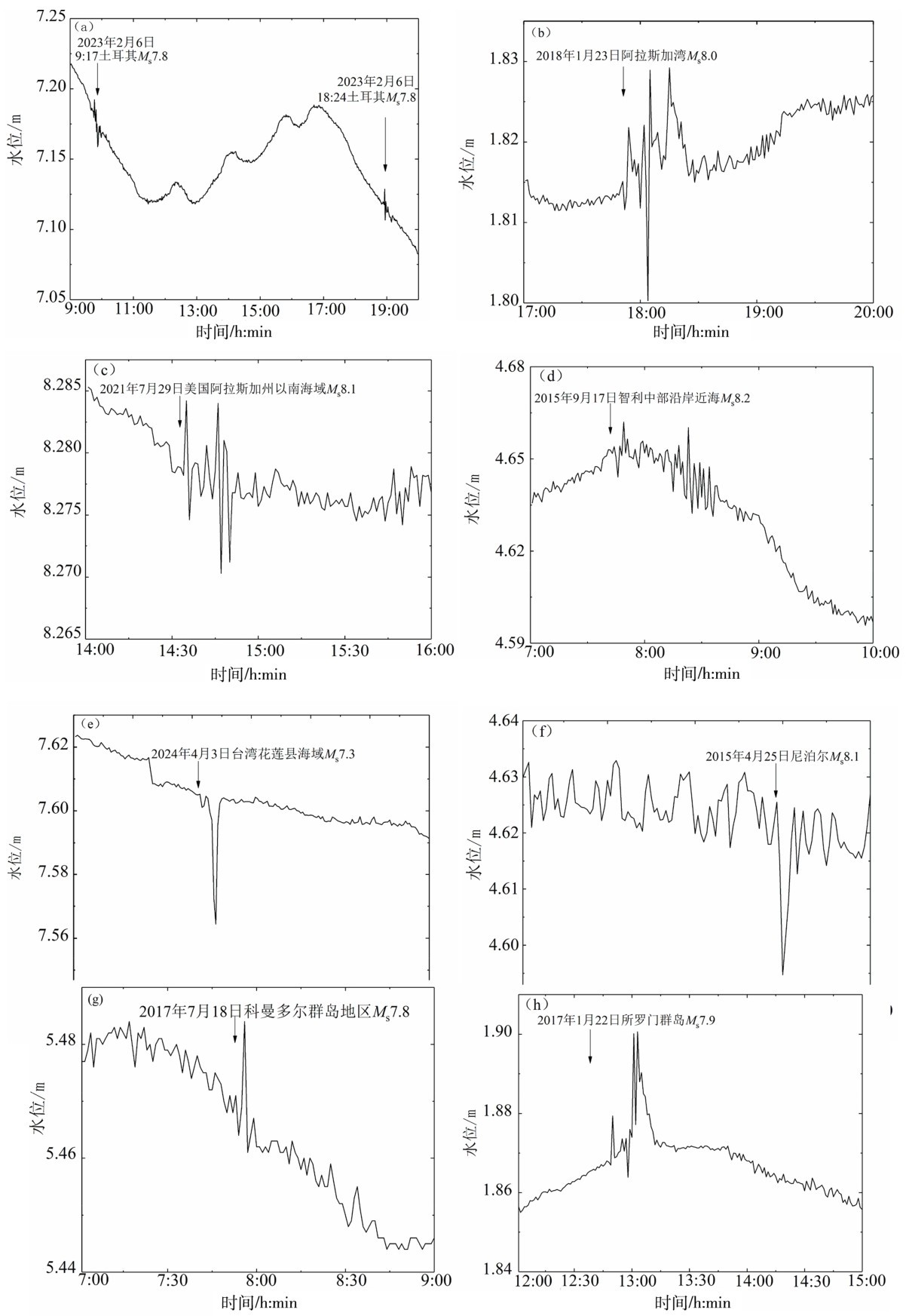
单口井对多个地震的响应特征并不相同,由地震波引起的水位变化特征主要有振荡型、阶变型(阶升、阶降)、脉冲型、复合型[15-20],其中怀4井同震响应类型为振荡型、脉冲型、复合型(图5)。怀4井的同震响应以振荡型为主,占总体响应类型的76.92%。振荡型是指在地震波的作用下,水位快速高频振荡,经过震荡后水位平静下来且水位仍沿着原来形态变化[21],怀4井振荡型水震波最小双振幅2 mm,最大33 mm,如图5(a)~(d)所示。其中图5a显示2023年2月6日土耳其两次MS7.8地震的同震响应形态一致,双振幅均为33 mm。怀4井对中远场地震的同震响应表现为脉冲型,占总体响应类型的19.23%。脉冲型是指在地震发生时,水位突升或突降,随后又迅速地恢复至震前水平,怀4井记录到的脉冲幅度最小16 mm,最大约41 mm如图5(e)~(g)。2024年4月3日中国台湾MS7.3地震时,井水位在突降至最低点后迅速回升,恢复到震前水平,是典型的脉冲型(图5e)。在这5次脉冲型同震响应中,只有2017年7月18日科曼多尔群岛地区MS7.8地震引起的同震响应表现为向上的脉冲,其余均为向下的脉冲(图5g)。复合型同震响应表现为脉冲-振荡型, 2017年1月22日所罗门群岛MS7.9地震后15 min,水位表现出短暂的振荡型异常,同时伴随阶降异常,双振幅37 mm(图5h),此异常变化形态与临夏井水位对2007年9月12日苏门答腊MS8.5地震的响应形态相似[22]。
根据表2统计,怀4井对于震中距大于5000 km的地震,表现为振荡型同震响应,对于中远场地震主要以脉冲型同震响应为主,本次统计中只记录到一次复合型同震响应。由于样本数量有限,今后还需要更多的震例予以验证。
![图1 怀4井地震地质构造背景图(修改自文献[11]) Fig.1 The tectoni background of Huai-4 well(revised from reference [11])](2026年02期/2期0005_figure_005_001.jpg)