收稿日期:2025-03-08
基金项目:国家自然科学基金(42174104,42374105);科技部科技基础资源调查专项(2023FY10150502)联合资助。
作者简介:申宇彤(1998-),女,助理工程师,主要从事重力观测与反演研究。E-mail:1241343880@qq.com
通信作者:杨光亮(1980-),男,研究员,主要从事地球重力观测理论与应用研究。E-mail:vfory@aliyun.com
基金项目:国家自然科学基金(42174104,42374105);科技部科技基础资源调查专项(2023FY10150502)联合资助。
作者简介:申宇彤(1998-),女,助理工程师,主要从事重力观测与反演研究。E-mail:1241343880@qq.com
通信作者:杨光亮(1980-),男,研究员,主要从事地球重力观测理论与应用研究。E-mail:vfory@aliyun.com
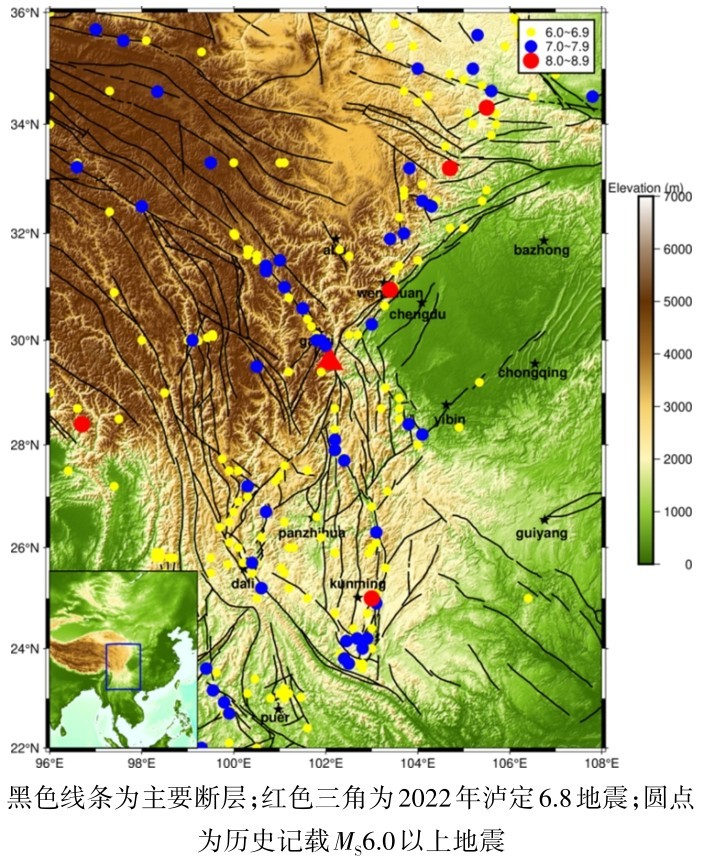

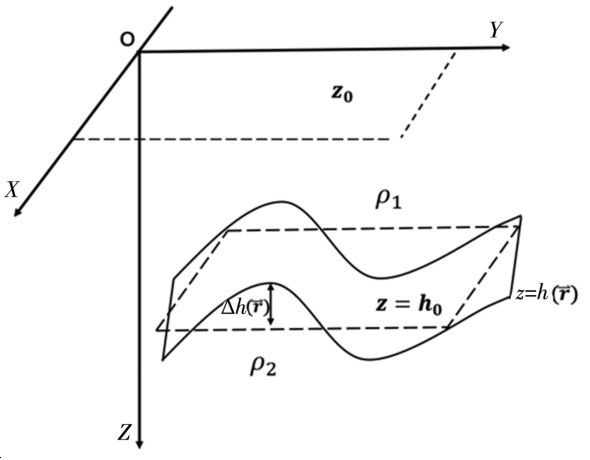
 为待反演二维连续界面,
 为r0在x - y平面的投影,Δρ为观测面与待反演层之间的三维剩余密度分布(或界面上下物质的密度差Δρ=ρ1 - ρ2), F表示空间域(x, y)转换到波数域k的傅氏变换算子。
 分解成两部分:反演界面参考深度h0及相对参考深度的起伏
 ,即:
,即:
 产生的高频振荡成分,可引入正则化因子[22],此时式(1)、(2)可以变为: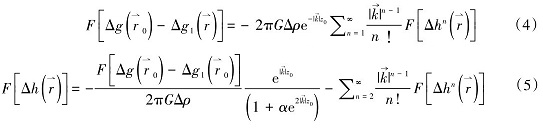
 为平板层h0引起的重力变化,1 +
 为正则化因子,α为正则化参数,正则化因子的最终效果相当于一个低通滤波器[22]。式(4)、(5)构成基于平面参考深度的Parker-Oldenburg迭代反演算法。该反演算法在青藏高原周缘、长江三峡等地区均取得了较好的应用效果[22-24]。本文采用的界面反演算法实现的原理详见文献[21],具体实施方案参见文献[22]~[24],这里不再赘述。